Lemony Snicket has won the Charlotte Zolotow Award for The Dark. I'm always glad this award for writing in a picture book exists. The Caldecott recognizes illustration, which is one important aspect of picture books, but illustrations alone do not a picture book make. (Except when they do, and I'm sure there's been a debate at some point about whether a well-plotted wordless picture book could win the CZA.) In any case, I wonder how that kid in the All the Wrong Questions books would feel about the accolades in his future.
Aline Sax and Caryl Strzelecki have won the National Jewish Book Award for Children's and Young Adult Literature for The War Within These Walls. The Sydney Taylor Book Award for Younger Readers goes to The Longest Night:A Passover Story by Laurel Snyder; for Older Readers, to The Blessing Cup by Patricia Polacco; and for Teen Readers, to The Nazi Hunters: How a Team of Spies and Survivors Captured the World's Most Notorious Nazi. A good mix, and I'm glad The Blessing Cup wasn't judged by its picture book-sized cover.
The Edgar Awards have announced their nominees, and I'm pleased to see that there's both a Juvenile and a Young Adult category. Also, that's officially enough buzz that All the Truth That's in Me is now on my library-hold list.
Bo at Ballard Creek by Kirkpatrick Hill has won the Scott O'Dell Award. I hadn't known much about this one, but it looks like a good (if decades-later) read-alike for the Little House books.
And of course, the National Book Award is old news by now, but I'm happy to see The Thing About Luck getting so much attention.
What did I miss?
Wednesday, January 22, 2014

Wednesday, January 15, 2014
Since we've just been introduced, I'll call it SLJRoBERT.
The Contender list is out for School Library Journal's 2014 Battle of the Books! We'll be on a nickname basis soon, but for now, I'll address BoB formally as Rehashing of Brilliant, Esteemed, Renowned Tomes.
I love that this list gets announced before the ALA winners do. The odds are high that some major award winners are on this list, but we don't know that for sure, and "hey, it won the Newbery" will at most be just one of some Contender's vital stats. (I'm still pulling for a Newbery for Counting by Sevens, which coulda been a Contender. And I think it's one of many strong Printz candidates, but I admit it would be fun to see how people described Reality Boy's premise if it won.)
This SLJBoB list shows exactly why I'm hesitant to make more concrete award predictions: 2013 was a strong and varied year. Just look at these contenders, virtually all of which have received serious mock Newbery and/or Printz attention. We have here a slim volume of emotion-encapsulating poetry and a semigraphic novel about a poetry-typing squirrel. We have two sequels that cover very different ground from their predecessors, which is exactly what makes them interesting. We have graphic novels set during China's Boxer Rebellion and America's Civil Rights Movement, and prose fiction set in the 1980s, in a village that might be in colonial America, and in the space between childhood and adolescence. We have animal factoids and arguments with a grandmother. In short, we have a lot of choices that are distinguished in very different ways, and my hat is off to the committees that will have to choose among them.
But I'm still planning to eat a bug, or possibly several metaphorical bugs in the form of ants on a log, if The Ocean at the End of the Lane doesn't win an Alex.
I love that this list gets announced before the ALA winners do. The odds are high that some major award winners are on this list, but we don't know that for sure, and "hey, it won the Newbery" will at most be just one of some Contender's vital stats. (I'm still pulling for a Newbery for Counting by Sevens, which coulda been a Contender. And I think it's one of many strong Printz candidates, but I admit it would be fun to see how people described Reality Boy's premise if it won.)
This SLJBoB list shows exactly why I'm hesitant to make more concrete award predictions: 2013 was a strong and varied year. Just look at these contenders, virtually all of which have received serious mock Newbery and/or Printz attention. We have here a slim volume of emotion-encapsulating poetry and a semigraphic novel about a poetry-typing squirrel. We have two sequels that cover very different ground from their predecessors, which is exactly what makes them interesting. We have graphic novels set during China's Boxer Rebellion and America's Civil Rights Movement, and prose fiction set in the 1980s, in a village that might be in colonial America, and in the space between childhood and adolescence. We have animal factoids and arguments with a grandmother. In short, we have a lot of choices that are distinguished in very different ways, and my hat is off to the committees that will have to choose among them.
But I'm still planning to eat a bug, or possibly several metaphorical bugs in the form of ants on a log, if The Ocean at the End of the Lane doesn't win an Alex.
Thursday, January 9, 2014
Thou shalt read.
Just before we graduated from Simmons, I got to read an early draft
of a novel about a girl with the Troubles. Gloria Jean's diagnosis of
celiac disease brought on some kissing concerns; who wants to worry
about what her partner has been chewing? But Gloria Jean also had some
less typically-YA worries. If she couldn't have gluten, how could she
take Communion?
That draft has since become Ten Commandments for Kissing Gloria Jean,
by Britt Leigh, now out from Pauline Books and Media. I've seen the
humor, thoughtfulness, and YA moxie that went into this novel, and I
can't wait to read the final product. Happy book birthweek, Britt!
Sunday, January 5, 2014
Happy things this year, so far
Allow me to join the chorus of those happy to see Kate DiCamillo named as the next National Ambassador for Young People's Literature. KD is an author who gets that "young people's literature" encompasses more than one category, and young people fit more than one description. Her books often ignore the boundaries between categories, which makes Bink, Gollie, and Mercy perfect for kids who are just starting to edge into chapter books. Her writing at all levels is challenging and calls readers to pay attention, and making people pay attention and challenging them sounds like a job for an Ambassador.
I'm also happy to see that according to PW, kids' and YA books were a force to be reckoned with this past year. That's a whole lot of adults buying books as gifts for their nieces and nephews and neighbors, a lot of parents listening to their kids' insistence that the new Wimpy Kid was worth a trip to the bookstore, a lot of kids spending their own allowance on books, maybe a lot of libraries with the capability to buy kids' books for their collections. Whatever made a piece of middle-grade humor rocket to the top of the list, with several other middle-grade and YA titles not too far below it, rock on.
More anecdotally, it made happy that when the Valentine's display went up at the front of the store, my coworker went looking for more diverse love stories... and found them in the YA section. Two Boys Kissing and If You Could Be Mine look perfect up there.
Finally, a dear friend - a friend who I'm pretty sure is cosmically connected to Kate DiCamillo - has a book release in progress. More on that soon, but for now I'll just say that, literarily at least, 2014 is looking up.
I'm also happy to see that according to PW, kids' and YA books were a force to be reckoned with this past year. That's a whole lot of adults buying books as gifts for their nieces and nephews and neighbors, a lot of parents listening to their kids' insistence that the new Wimpy Kid was worth a trip to the bookstore, a lot of kids spending their own allowance on books, maybe a lot of libraries with the capability to buy kids' books for their collections. Whatever made a piece of middle-grade humor rocket to the top of the list, with several other middle-grade and YA titles not too far below it, rock on.
More anecdotally, it made happy that when the Valentine's display went up at the front of the store, my coworker went looking for more diverse love stories... and found them in the YA section. Two Boys Kissing and If You Could Be Mine look perfect up there.
Finally, a dear friend - a friend who I'm pretty sure is cosmically connected to Kate DiCamillo - has a book release in progress. More on that soon, but for now I'll just say that, literarily at least, 2014 is looking up.
Tuesday, December 24, 2013
'Twas the post before Christmas...
Parodies of songs and poems are a big part of my writing life. Since I mostly write them just for the heck of it, they don't run on any particular schedule, and sometimes months pass between one parody and the next. But in the weeks since Thanksgiving and Hanukkah coincided, I've felt the urge to generate them constantly. Some have found their way onto Facebook or the store's blog; others haven't even been worth writing down (if you're going to sort a mountain of eight-by-eights, you might as well mumble-sing about them to the tune of whatever's been playing over the PA). It's always been like this. Holidays - my own and other people's - bring this out.
It's not just me, either. How many parodies do you hear on TV between, say, January and (early) October? And in the past two months, how many commercials have you heard that are based on "Jingle Bells," "Deck the Halls," or the especially ubiquitous "A Visit from St. Nicholas?" Look around. Scroll through your social media outlet of choice. How many altered lines from Christmas carols do you see?
Why do we have this tendency? I'm sure part of it is that evoking the night before Christmas is a great way to make the need for shopping seem urgent. But I think it's more than that. I know I'm a bigger parody nerd than most, but my sense is that in general, carol parodies get the public's attention. We hear the altered beginning of a holiday favorite, and we pay attention. We know we're about to hear a story, even if it's a story about some dude who rushed into a store at the last minute and found the perfect item with which to deck the halls.
When we hear a parody, and even more so when we write one, we feel like we're engaging with the original material. We're making it our own. We're creating this year's version. If it's a song we love, we're digging into it more deeply. If it's one we think is silly, we're subverting it. Sometimes, we're doing both at once.
Merry earworms to all, and to all a good-night.
It's not just me, either. How many parodies do you hear on TV between, say, January and (early) October? And in the past two months, how many commercials have you heard that are based on "Jingle Bells," "Deck the Halls," or the especially ubiquitous "A Visit from St. Nicholas?" Look around. Scroll through your social media outlet of choice. How many altered lines from Christmas carols do you see?
Why do we have this tendency? I'm sure part of it is that evoking the night before Christmas is a great way to make the need for shopping seem urgent. But I think it's more than that. I know I'm a bigger parody nerd than most, but my sense is that in general, carol parodies get the public's attention. We hear the altered beginning of a holiday favorite, and we pay attention. We know we're about to hear a story, even if it's a story about some dude who rushed into a store at the last minute and found the perfect item with which to deck the halls.
When we hear a parody, and even more so when we write one, we feel like we're engaging with the original material. We're making it our own. We're creating this year's version. If it's a song we love, we're digging into it more deeply. If it's one we think is silly, we're subverting it. Sometimes, we're doing both at once.
Merry earworms to all, and to all a good-night.
Wednesday, December 11, 2013
Raves & Faves 2013, Part II: Middle-Grade and YA
See also, Things That Are Not Easy to Narrow Down. And I thought picture books were hard.

Flora and Ulysses, by Kate DiCamillo. This book succeeds at being sophisticated enough for voracious readers and visually inviting enough for reluctant ones. It is hilarious. It includes a poetry-typing squirrel and phrases like "holy unanticipated occurrences!" It rocks on the diversity front without making a big deal about it. Holy bagumba.
 The Very Nearly Honorable League of Pirates 1: Magic Marks the Spot, by Caroline Carlson. Full disclosure: the author is a friend. But even if she weren't, there'd still be a talking gargoyle. And a ridiculous charm school. And a girl who runs away from it to become a pirate. This one's been an easy handsell, and I imagine a lot of young readers here in Brookline are having a good laugh.
 The Thing About Luck, by Cynthia Kadohata. The thing about this year's National Book Award winner is its personality. While it shows a segment of society I hadn't known much about (I think the last book I read about migrant workers was The Grapes of Wrath), it also introduces a character who's pretty unusual, largely because of the unusual situations she's been through. How many contemporary kids have had malaria? But her struggles to get along with relatives in authority (I wanted to shake that grandmother) are pretty identifiable for many middle school-aged kids, and hey, the urge to shake a character is kind of the same thing as caring about a novel.
 P.S. Be Eleven, by Rita Williams-Garcia. Though this novel does stand alone, I especially love how it works as a set with One Crazy Summer. In Summer, we got to know Delphine's mother, and particularly got to know her flaws and how they impact her daughters. In P.S. Be Eleven, the same can be said about the girls' father and grandmother. Delphine, Vonetta, and Fern are caught between two sets of values, which leaves them to figure out what matters to them. Sounds like a pretty good metaphor for the '60s, from what I hear.
 Counting by Sevens, by Holly Goldberg Sloan. There's a reason there are so many great novels narrated by characters with unusual minds, whether they have cognitive disorders or whether they're very structured geniuses - they have their own ways of seeing the world, and those ways can be funny even as they give us new insights into serious situations. Think Sheldon Cooper in need of a hug, surrounded by other characters in need of a friend. I loved this.
 The Real Boy, by Anne Ursu. Speaking of characters who look at the world in unusual ways, Oscar understands the concrete details of the magician's shop where he works, but human interaction leaves him puzzled, and a magical mystery makes his world even more befuddling. There are enough twists and turns here that at one point, I really questioned what this novel was saying about kids with autism, but [spoiler, kind of] it ultimately affirms their humanity. This book is a prime example of how fantasy can be used to explore the real world.
 Better Nate Than Ever, by Tim Federle. I've often lamented what traditional middle-grade doesn't do for and about kids questioning their sexuality, but this year, those rants have required a significant footnote, and Better Nate deserves mention for being that footnote. (As I've also noted, there's been even further progress since this book came out.) With the exception of some fairly ugly name-calling, this is a pretty innocent story about a very naive kid, and most of the book is about his stupid but understandable decision to sneak off to New York and audition for a Broadway show. It's funny. You root for Nate even as you shake your head at him. You maybe once or twice call him a doofus.

 Eleanor and Park and Fangirl, or The Arrival of Rainbow Rowell on the YA Scene. The first of these books takes difficult situations and tempers them with tenderness and humor. The second looks like a light story about fan fiction, but there's enough going on that I think it has just as much depth. Both books show young people who don't quite fit (in more creative ways than the traditional she-wears-glasses-and-reads-and-nobody-likes-her), and in both, the characters learn to forge connections during - and to some degree, because of - difficult times. We had Ms. Rowell and three rather like-minded YA authors at our store a few weeks ago, and the room was packed with fans. I've said it before and I'll say it again: YA is getting smarter.
 Relatedly, If You Could Be Mine, by Sara Farizan. This story could've rested entirely on its premise: though homosexual acts are illegal in Iran, sex reassignment surgery is not, and protagonist Sahar wants to use that to help her be with the girl she loves. What I love about this book is that its characters are so well-drawn, their personalities are as vivid a part of the story as the strange facts of its plot. Yes, I wanted to change things for Sahar and Nasrin, but there were times when I also wanted to shake each of them. And, as previously stated, that's a good thing.
That's probably enough raving for now. Happy reading!
The Very Nearly Honorable League of Pirates 1: Magic Marks the Spot, by Caroline Carlson. Full disclosure: the author is a friend. But even if she weren't, there'd still be a talking gargoyle. And a ridiculous charm school. And a girl who runs away from it to become a pirate. This one's been an easy handsell, and I imagine a lot of young readers here in Brookline are having a good laugh.The Thing About Luck, by Cynthia Kadohata. The thing about this year's National Book Award winner is its personality. While it shows a segment of society I hadn't known much about (I think the last book I read about migrant workers was The Grapes of Wrath), it also introduces a character who's pretty unusual, largely because of the unusual situations she's been through. How many contemporary kids have had malaria? But her struggles to get along with relatives in authority (I wanted to shake that grandmother) are pretty identifiable for many middle school-aged kids, and hey, the urge to shake a character is kind of the same thing as caring about a novel.P.S. Be Eleven, by Rita Williams-Garcia. Though this novel does stand alone, I especially love how it works as a set with One Crazy Summer. In Summer, we got to know Delphine's mother, and particularly got to know her flaws and how they impact her daughters. In P.S. Be Eleven, the same can be said about the girls' father and grandmother. Delphine, Vonetta, and Fern are caught between two sets of values, which leaves them to figure out what matters to them. Sounds like a pretty good metaphor for the '60s, from what I hear.Counting by Sevens, by Holly Goldberg Sloan. There's a reason there are so many great novels narrated by characters with unusual minds, whether they have cognitive disorders or whether they're very structured geniuses - they have their own ways of seeing the world, and those ways can be funny even as they give us new insights into serious situations. Think Sheldon Cooper in need of a hug, surrounded by other characters in need of a friend. I loved this.The Real Boy, by Anne Ursu. Speaking of characters who look at the world in unusual ways, Oscar understands the concrete details of the magician's shop where he works, but human interaction leaves him puzzled, and a magical mystery makes his world even more befuddling. There are enough twists and turns here that at one point, I really questioned what this novel was saying about kids with autism, but [spoiler, kind of] it ultimately affirms their humanity. This book is a prime example of how fantasy can be used to explore the real world.Better Nate Than Ever, by Tim Federle. I've often lamented what traditional middle-grade doesn't do for and about kids questioning their sexuality, but this year, those rants have required a significant footnote, and Better Nate deserves mention for being that footnote. (As I've also noted, there's been even further progress since this book came out.) With the exception of some fairly ugly name-calling, this is a pretty innocent story about a very naive kid, and most of the book is about his stupid but understandable decision to sneak off to New York and audition for a Broadway show. It's funny. You root for Nate even as you shake your head at him. You maybe once or twice call him a doofus.Eleanor and Park and Fangirl, or The Arrival of Rainbow Rowell on the YA Scene. The first of these books takes difficult situations and tempers them with tenderness and humor. The second looks like a light story about fan fiction, but there's enough going on that I think it has just as much depth. Both books show young people who don't quite fit (in more creative ways than the traditional she-wears-glasses-and-reads-and-nobody-likes-her), and in both, the characters learn to forge connections during - and to some degree, because of - difficult times. We had Ms. Rowell and three rather like-minded YA authors at our store a few weeks ago, and the room was packed with fans. I've said it before and I'll say it again: YA is getting smarter.Relatedly, If You Could Be Mine, by Sara Farizan. This story could've rested entirely on its premise: though homosexual acts are illegal in Iran, sex reassignment surgery is not, and protagonist Sahar wants to use that to help her be with the girl she loves. What I love about this book is that its characters are so well-drawn, their personalities are as vivid a part of the story as the strange facts of its plot. Yes, I wanted to change things for Sahar and Nasrin, but there were times when I also wanted to shake each of them. And, as previously stated, that's a good thing.That's probably enough raving for now. Happy reading!
Monday, December 2, 2013
Raves & Faves 2013 Part I: Picture Books
I didn't realize how many books I loved this year until I started trying to list them. And then I realized I needed at least two posts. Here's the first: a few of my favorite books this year that fit at least some definition of the term picture book; I'd call this my Best Illustrated list, but that would exclude at least one title that's going in Part II. We live in category-busting times, my friends.
 Mr. Tiger Goes Wild, by Peter Brown. I almost don't know why I love this book so much. The story is pretty simple: Mr. Tiger wants to stop being so prim, and he does, and then he makes it easier for others to do the same. Maybe it's partly that I'm really proud of Mr. Tiger; there are reasons, some of them straight out of crit class, that so many people embrace "be yourself" stories. Or maybe it's just that Peter Brown knows how to create really, really appealing illustrations.
 Xander's Panda Party, by Linda Sue Park, illustrated by Matt Phelan. I always find myself starting the pitch for this one with the fact that even though the text looks like prose, it's actually a great rhyming text, perfect for reading aloud. But there's so much more to XPP. Kids love to categorize, and as Xander's birthday guest list grows from "bears" to "creatures," they get to become miniature taxonomists. Matt Phelan's animals of all phyla and classes are pretty darn huggable.
 The Day the Crayons Quit, by Drew Daywalt, illustrated by Oliver Jeffers. This longer picture book's popularity is a mini-phenomenon. Duncan's crayons are fed up, all for wholly original reasons that made perfect sense to my inner six-year-old. Yes, yellow and orange would fight about who should draw the sun. Yes, black would be sick of making outlines. Yes, if crayons wrote angry letters, they would look just like that.
 Battle Bunny, by Jon Scieszka and Mac Barnett, illustrated by Matthew Myers. A syrupy story about a birthday bunny might be right for some readers, but not for Alex. He scribbles all over the book - it's his book, after all - and turns it into a much higher-octane story. I am all about books that show kids that reading - and writing! - can be about anything they want, and I have visions of reading this aloud in tandem, with one reader reading the "original" story and the other grabbing the book and roaring the changes. (The book is probably too small for this to work for large groups.)
 Nelson Mandela, by Kadir Nelson. It's been pretty comforting to have Mandela's face watching us from displays throughout the year. And the poetic language inside feels reassuring, too, even as it deals with the difficult parts of Mandela's life. This sort of book is why we have picture book biographies.
Coming soon: middle-grade and YA!
Mr. Tiger Goes Wild, by Peter Brown. I almost don't know why I love this book so much. The story is pretty simple: Mr. Tiger wants to stop being so prim, and he does, and then he makes it easier for others to do the same. Maybe it's partly that I'm really proud of Mr. Tiger; there are reasons, some of them straight out of crit class, that so many people embrace "be yourself" stories. Or maybe it's just that Peter Brown knows how to create really, really appealing illustrations. | |
| |
Xander's Panda Party, by Linda Sue Park, illustrated by Matt Phelan. I always find myself starting the pitch for this one with the fact that even though the text looks like prose, it's actually a great rhyming text, perfect for reading aloud. But there's so much more to XPP. Kids love to categorize, and as Xander's birthday guest list grows from "bears" to "creatures," they get to become miniature taxonomists. Matt Phelan's animals of all phyla and classes are pretty darn huggable. The Day the Crayons Quit, by Drew Daywalt, illustrated by Oliver Jeffers. This longer picture book's popularity is a mini-phenomenon. Duncan's crayons are fed up, all for wholly original reasons that made perfect sense to my inner six-year-old. Yes, yellow and orange would fight about who should draw the sun. Yes, black would be sick of making outlines. Yes, if crayons wrote angry letters, they would look just like that.
 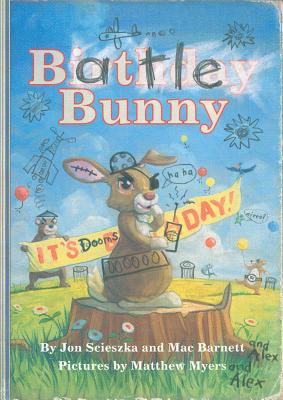 Battle Bunny, by Jon Scieszka and Mac Barnett, illustrated by Matthew Myers. A syrupy story about a birthday bunny might be right for some readers, but not for Alex. He scribbles all over the book - it's his book, after all - and turns it into a much higher-octane story. I am all about books that show kids that reading - and writing! - can be about anything they want, and I have visions of reading this aloud in tandem, with one reader reading the "original" story and the other grabbing the book and roaring the changes. (The book is probably too small for this to work for large groups.)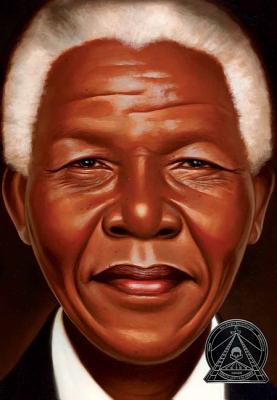
Coming soon: middle-grade and YA!
Subscribe to:
Posts (Atom)
